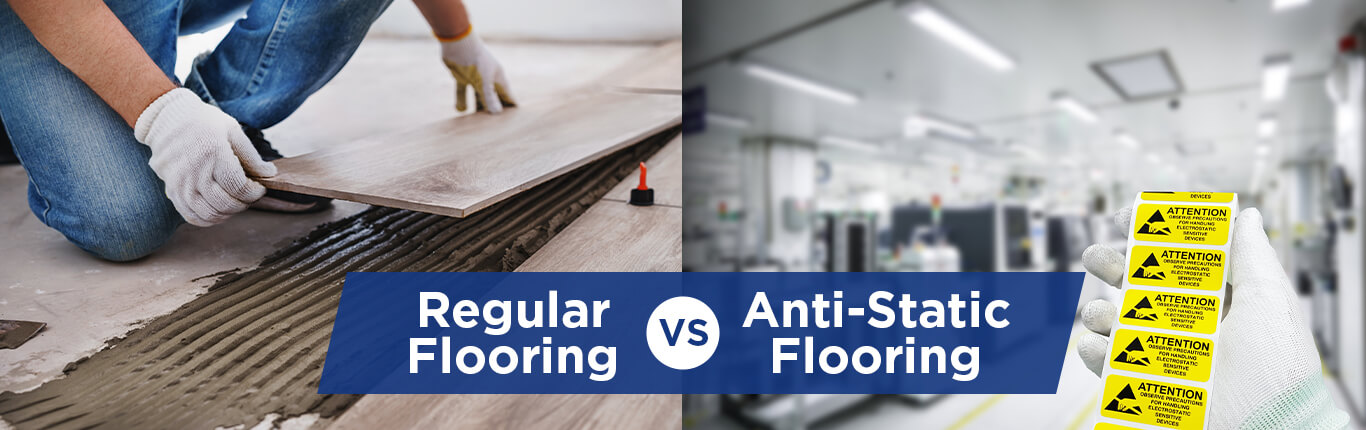
Durability and appearance are typically the first considerations when selecting floor coverings for industrial and commercial spaces. However, there is sometimes an additional factor you need to factor in: static electricity.
Anti-static flooring helps remove the build-up of static charge to protect sensitive equipment and to minimize shocks or sparks. Normal flooring cannot do this.
Let’s examine anti-static flooring and some insight into why it deserves your consideration.
What Is Anti-Static Flooring?
Anti-static flooring materials are specially manufactured to remove any electrical charge that may develop on the surface of the flooring. This is a critical factor in spaces that have electronics or any flammable materials present in the area.
Anti-static flooring creates a safe pathway for the excess static electricity to be dissipated without causing any shock or additional static electricity or flame build-up.
How Anti-Static Flooring Works Differently
A regular floor only provides a walking surface or surface for placing equipment, whereas an anti-static floor actively manages electricity.
Anti-static flooring is usually made of epoxy, polyurethane, or vinyl, which includes conductive components in the product. These material systems allow static electricity to discharge without the chance of shock into the ground, protecting you and your device.
Dr Cipy’s resin-based ESD flooring systems provide advanced static control. They create a durable, seamless, and attractive surface that effectively dissipates electrostatic discharge.
Dr Cipy also provides fiber-free ESD flooring, which is a first of its kind in India. By integrating liquid anti-static technology, it provides a constant and uniform level of conductivity that older, fiber-based systems cannot match. This breakthrough technology offers enhanced reliability for static-sensitive environments.
Why Use Anti-Static Flooring?
There are many reasons why businesses want to install anti-static flooring, including the various benefits of anti-static flooring.
- Equipment Protection: Anti-static flooring protects sensitive electronics from unexpected static shocks.
- Enhanced Safety: Reduces the potential of discharge or sparks, especially beneficial in labs or rooms with combustible materials.
- Long-lasting and Easy to Maintain: This type of flooring will resist wear from foot traffic or equipment scuffing. It is easy to care for and simple to clean.
- Compliance with Safety Standards: Specifically, anti-static flooring helps meet certain safety requirements while working in an ESD (electrostatic discharge) working environment.
Where Is Anti-Static Flooring Used?
You will find anti-static flooring within industries and places such as:
- Electronics manufacturing and server rooms.
- Laboratory or pharmaceutical settings.
- Industrial buildings with sensitive equipment.
- Data centers.
- Electrical control rooms.
Appearance and Care
People often think anti-static flooring will look odd when compared with a normal flooring surface. However, anti-static flooring looks just like regular epoxy flooring, PU, or vinyl flooring. Anti-static flooring can be colored or textured like the existing surface in the room.
In addition, the set design with anti-static flooring is simple. Sweeping and mopping with mild detergents is all it takes to maintain it.
Regular Flooring vs Anti-static Flooring
| Feature | Regular Flooring | Anti-Static Flooring |
| Static Control | None – allows static to build up | Controls and safely dissipates static electricity |
| Safety | Standard surface safety | Reduces the risk of shocks and sparks |
| Equipment Protection | No protection for sensitive devices | Protects electronics and sensitive equipment |
| Appearance | Can be polished, smooth, or textured | Looks similar to regular flooring; can be customized |
| Typical Materials | Concrete, tiles, epoxy, PU | Epoxy, PU, or vinyl with conductive properties |
| Maintenance | Regular cleaning | Regular cleaning, same as standard floors, easy upkeep |
Conclusion
If your facility deals with electronics, labs, or flammable materials, anti-static flooring is not optional – it’s essential. It protects equipment, keeps people safe, and lasts for years without heavy upkeep.
Check out Dr Cipy ESD or anti-static flooring systems, available for every industrial and commercial application and environment. They can help you determine the correct system for your application and install it properly.
Contact us today to explore anti-static flooring options that fit your facility.
FAQs
It is a flooring system that will either prevent the build-up of static electric charging or safely dissipate any charges.
Anti-static flooring manages static electricity. Ordinary flooring allows it to build up.
In laboratories, cleanrooms, electronics manufacturing, hospitals, and throughout industries where some equipment is super-sensitive to static electricity.
Not really, the anti-static flooring can look just like a regular epoxy, PU, or vinyl floor. The floor surface can be made in different color options and textures as well.