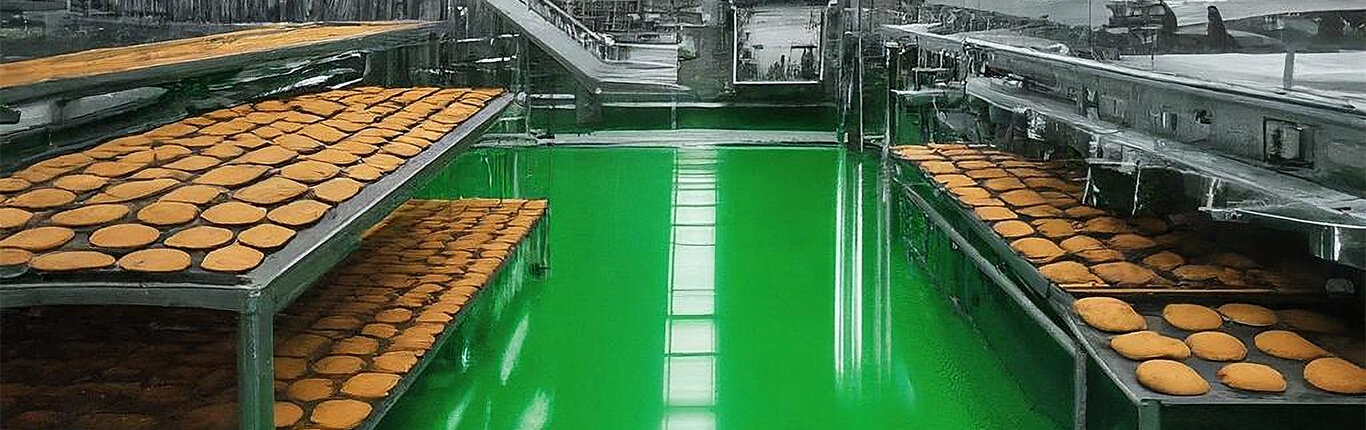
Anyone who’s worked inside a food processing plant knows what the floors go through. Hot water, cleaning chemicals, oil splashes, constant trolley movement, and somehow, they’re still expected to stay clean and crack-free. But once the coating begins to chip or water starts seeping in, hygiene takes a hit fast. Bacteria and other microbes seep in, and their removal becomes harder. Maintenance can start to eat into production time as well when this happens.
That’s exactly what happened in one facility before they decided to switch to PU Concrete Flooring, a change that ended up solving multiple problems at once.
The Hygiene Struggle Every
Food Plant Faces
Floors in food zones are under constant stress. It’s not just the daily cleaning routines; it’s the mix of moisture, heat, and chemical exposure that slowly wears them down. Once a crack appears, it’s nearly impossible to keep that area bacteria-free. You might clean ten times a day, but if the surface isn’t sealed, microbes will always have a place to hide.
Hygiene inspectors often pick up these weak spots quickly. Even a small patch of damaged flooring can be flagged as a potential contamination source, which, in food production, is no small issue. So, the goal isn’t just to have a “clean-looking” floor. It has to be seamless, durable, non-absorbent, and able to take all that punishment without breaking down.
Why PU Concrete Flooring Became the Obvious Choice
Polyurethane (PU) concrete flooring is built for exactly this type of environment. It’s not just a coating; it’s a full flooring system that bonds tightly to the concrete base, forming a dense, chemical-resistant surface.
The biggest difference? It doesn’t soften or peel under heat and chemicals the way epoxy floors often do. That alone makes it a top choice for food processing areas where cleaning involves hot water or steam.
It must be seamless, durable, impervious to chemicals, and able to withstand the abuse without deterioration.
PU Concrete Floorings: The Material of Choice
PU concrete floorings are designed specifically to withstand the environment just described. PU concrete floorings are not just “coated” like an epoxy floor; they are complete flooring systems that are bonded directly to the concrete substrate, forming a thick, impenetrable, and chemically resistant surface.
Polyurethane (PU) concrete flooring is a great alternative to epoxy flooring as it doesn’t get soft or “peeling” from heat or chemical exposure, which is an advantage for many food production-type businesses that often sanitise with heated water or steam.
Advantages Of A PU Concrete Floor System
- Slip Resistant: PU concrete flooring systems utilise textured surfaces, which provide a high level of slip resistance when wet or oily.
- Thermal Shock Resistant: PU concrete flooring systems can endure thermal shock from -40 to 120°C (-40 to 248°F), and will not crack as a result.
- Chemical Resistant: Most types of acids, fats, sugars, and many common household cleaners are chemically resistant when used on PU concrete flooring systems.
- Hygienic: Since PU concrete flooring systems are seamless in nature, any joints or seams create no means for bacteria to settle upon, thus preventing bacterial growth.
- Rapid ROI for Manufacturers: Manufacturers that install PU concrete flooring systems can achieve quick returns on their investment as they cure very quickly after installation.
- Long Lasting: PU concrete flooring systems will keep their finish, appearance, and surface characteristics for many years, even after heavy use.
In short, it’s a flooring solution that works as hard as the plant itself.
What Changed Inside the Food Processing Plant
The plant’s old epoxy surface had reached its limit. Cracks continued to reappear near drains and under machinery. After multiple repairs having been made, the issue of Water seepage through the flooring continued to persist. The results of the hygienic audits were not very good, and therefore, cleaning teams had to spend extra time sanitising the floors.
When they switched to a Polyurethane Floor Coating, the first thing done was the complete removal of the old layer. The concrete base was then treated and levelled before the PU screed was applied. A final anti-slip topcoat sealed everything off.
Here’s what stood out after the upgrade:
- Cleaning time dropped noticeably, less scrubbing, fewer re-cleans.
- Audit results improved, especially in previously problematic zones.
- There was no sign of wear and tear despite meticulous cleaning procedures.
- Workers noticed a better grip and safety on wet floors, due to its anti-slip properties.
It wasn’t just a cosmetic fix. It directly improved hygiene, safety, and maintenance costs, all from one flooring change.
Why PU Concrete Makes Sense for Food Facilities
There’s a reason food, beverage, and dairy plants across the world are shifting to PU flooring. It’s one of the few materials that can withstand constant moisture, chemical exposure, and cleaning cycles without losing performance.
Unlike tiles or epoxy, it doesn’t create joints or seams where bacteria can collect. It also holds up well to heavy mechanical loads; forklifts, trolleys, and pallet jacks don’t cause surface damage. Over time, that stability makes it easier to maintain hygiene without constant repair work.
And from a compliance standpoint, it helps facilities meet global food-grade standards, including FSSAI, FDA, and EU food hygiene norms, because it’s smooth, non-absorbent, and easy to sanitise.
Why Dr Cipy’s PU Flooring Stands Out
Dr Cipy’s polyurethane flooring systems are formulated specifically for hygiene-sensitive industries. Each variant is engineered to handle a mix of thermal, mechanical, and chemical stress, exactly what’s expected inside a food plant.
PU concrete floor systems provide the following major benefits:
- A long-lasting, seamless surface with a non-slip finish.
- Protection against moisture or bacteria build-up
- Quick and easy installation, with minimal interruption to your production.
That’s why many industrial clients now prefer PU flooring not just for durability but for the peace of mind it brings when hygiene audits roll in.
Final Thoughts
Hygiene lapses in food processing rarely start with machinery; they often start from the ground up. Cracked or damaged flooring is a silent threat to the cleanliness of any facility; switching from ‘traditional’ flooring (or standard concrete) to PU Concrete Flooring will eliminate that weak link.
For plants aiming to meet strict hygiene benchmarks and reduce maintenance hassles, Dr Cipy’s polyurethane floor coating solutions provide the ultimate in reliability, safety and long-lasting performance.
FAQs
Food processing plants continually clean their facilities and experience wear and tear from chemicals/cleaners as well as damaged or cracked floors, all of which create the environment for bacteria to thrive and contaminate products.
PU Concrete is an advanced floor surface being made by combining a polyurethane and a cement material that is specifically designed to endure extreme heat and cold, as well as exposure to a variety of chemicals and moisture.
PU concrete flooring has a smooth, non-porous surface that is easy to clean. The lack of pores or other irregularities significantly reduces the possibility of bacteria becoming established on a PU concrete floor.
4. What is the average time frame to install PU concrete flooring within food processing facilities?
The installation period of PU concrete flooring will vary; however, installations typically take between 1-3 days, depending on the size of the space being worked on as well as the curing time.