
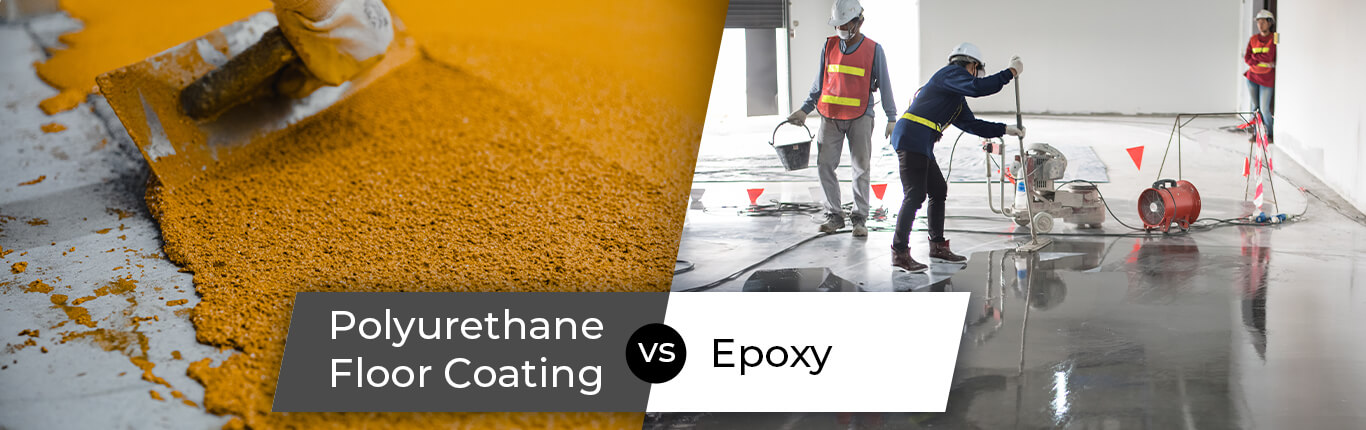
Epoxy and polyurethane are often discussed as if one has to replace the other. In reality, they serve different purposes on an industrial floor. Problems usually start when the wrong coating is chosen for the environment, not because the material itself is poor.
Both systems are widely used in factories, warehouses, parking areas, and processing plants. The difference lies in how they react over time to movement, cleaning, sunlight, and wear.
Where Epoxy Floor Coatings Perform Well
Epoxy flooring systems are often used indoors because they offer high durability and excellent bonding characteristics to concrete when fully cured. The resulting surface of epoxy is also very dense and highly resistant to oils, solvents, and many common industrial chemicals. Therefore, they are often used in controlled environments of indoor buildings.
Manufacturers frequently use epoxy flooring in the following types of locations: manufacturing plants, warehouse facilities, laboratory work places, electrical rooms, basement garages, and sheltered parking spaces. These areas have limited fluctuations in temperature and little or no exposure to direct sunlight.
Epoxy does have limitations. It is rigid by nature. When concrete expands and contracts repeatedly due to temperature change, or when vibration is constant, epoxy can begin to crack or lose surface integrity. Although epoxy is not guaranteed to fail quickly, epoxy performs best with minimal movement.
How Polyurethane Floor Coatings Behave Differently
A polyurethane floor coating reacts differently under stress. It remains flexible after curing, which allows it to absorb movement rather than resist it. Because of this flexibility, polyurethane has a noticeable difference when it is subjected to thermal cycling, abrasion, and/or vibration.
Polyurethane is commonly used in food processing plants, wet production zones, ramps, rooftops, and areas exposed to daylight. It also performs well in places where rubber-wheel traffic is continuous.
Another important difference is UV stability. Unlike epoxy, polyurethane does not yellow or chalk when exposed to sunlight. For floors that receive natural light or are partially outdoors, this becomes a deciding factor.
Epoxy vs Polyurethane: What Actually Matters in Use
The discussion around epoxy vs polyurethane durability often misses the point. Durability depends on conditions.
Epoxy lasts very well under static loads and controlled indoor use. Polyurethane lasts longer in environments where:
- temperatures fluctuate
- washing is frequent
- abrasion is constant
- surface movement cannot be avoided
This is why many industrial floors use epoxy as a base layer and polyurethane as a topcoat. The epoxy provides adhesion and build, while the polyurethane protects the surface from wear and exposure.
Epoxy vs Polyurethane: Key Performance Differences
Here’s how the two materials differ in practical terms:
| Aspect | Epoxy Flooring | Polyurethane Floor Coating |
| Surface hardness | Very hard and rigid | Slightly softer, more resilient |
| Flexibility | Low | High |
| UV resistance | Poor | Excellent |
| Abrasion resistance | Good | Better for long-term wear |
| Thermal movement tolerance | Limited | High |
| Best environment | Indoor, stable conditions | Outdoor, wet, or temperature-variable areas |
This is why many facilities don’t choose one or the other; they use both, layered correctly.
How Dr Cipy Aligns These Systems
Dr Cipy does not treat epoxy and polyurethane as competing products. Their approach is system-based.
They supply:
- epoxy primers and self-leveling floors for indoor industrial use.
- epoxy screeds for areas requiring thickness and load-bearing capacity.
- EPU hybrid systems where both properties are required.
- polyurethane floor coatings for abrasion and UV resistance.
- PU concrete flooring systems for wet, hygiene-sensitive environments.
This allows the flooring specification to match the operating conditions rather than forcing one material into every situation.
Conclusion
There is no universal answer to the epoxy vs polyurethane question. Each coating behaves differently once it is exposed to real conditions.
Epoxy offers strength, chemical resistance, and cost efficiency. Polyurethane provides additional flexibility, UV resistance, and a higher degree of long-term protection from wear. Using both together produces the best overall results.
Dr Cipy’s experience across epoxy flooring systems, polyurethane floor coatings, EPU hybrids, and PU concrete floors allows them to recommend solutions based on how a floor will actually be used.
FAQs
Yes, Polyurethane is widely used in a variety of applications requiring flexibility, abrasion resistance, and UV stability.
Epoxy is rigid and hard, while polyurethane is flexible and better suited for movement and exposure.
Under stable, dry indoor conditions, epoxy outlasts polyurethane. However, in dynamic or exposed environments, polyurethane will probably outlast epoxy.
Yes, generally speaking, epoxy would be used as a coating indoors, while polyurethane would typically be used in exposed outdoor sections or heavily worn residential sections.
To make that decision, you will need to consider the amount of exposure you will have, how much movement there is in your space, and how often you will be cleaning the surface. There will be many instances where blending both products will work the best.