
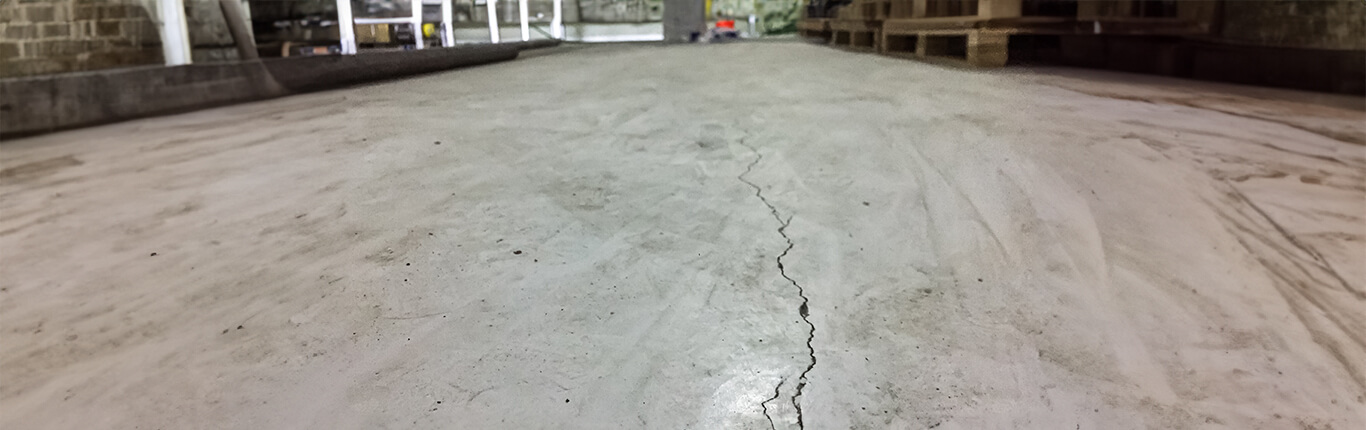
Concrete does crack. The issue is that not every crack is harmless, and treating them all the same way is where facilities get into trouble. Some are cosmetic. Others are early signals of something deeper, something that affects operations, safety, and long-term costs.
What most contractors won’t tell you is that the majority of these cracks are predictable. A good portion are preventable. And the ones that do appear almost always trace back to decisions made well before anyone noticed a problem.
Not All Cracks Are the Same
Before repairing anything, cracks need to be thoroughly inspected. Identifying what we are actually dealing with is a necessary step. Here are the major types of industrial floor cracking:
- Hairline cracks: Thin, surface-level, generally cosmetic.
- Shrinkage cracks: Caused by moisture escaping too quickly during curing.
- Structural cracks: Deeper, wider, and the kind that keep growing if ignored.
- Load-induced cracks: Show up where heavy machinery or concentrated loads have pushed the floor beyond what it was built for.
The crack type determines everything, from the diagnosis to the repair method, and whether that repair will actually hold.
1. Poor Concrete Mix
A surprising number of cracking problems start before the concrete is even poured. If the water-cement ratio is too high, the mix is weaker and far more prone to shrinkage. Pair that with inconsistent aggregates or poor-quality materials, and you’ve already built the conditions for cracking into the floor before work begins.
The mix design needs to be based on actual load requirements, not a generic recipe. Concrete floor cracking solutions, properly understood, often begin at the specification stage.
2. Inadequate Subgrade Preparation
The base beneath the concrete matters more than most people realise. If it’s uneven, poorly compacted, or unstable, the slab above it settles unevenly, and cracks form at the stress points.
- Skipping compaction testing or doing it superficially.
- Ignoring soft spots or variable soil conditions.
- Allowing uneven base layers to go uncorrected before pouring.
Proper subgrade compaction, tested rather than assumed, is non-negotiable for any industrial application.
3. Concrete Curing Problems
Curing is where industrial floors are probably let down most often. It takes time, it’s invisible, and on a busy schedule, it gets rushed.
Concrete doesn’t just dry; it undergoes a chemical reaction that builds its strength. Disrupt that process through heat, wind, or cutting the timeline short, and the concrete shrinks unevenly. That’s what cracks it.
- What goes wrong: Schedule pressure, fresh concrete left exposed to sun or wind, no curing compound applied.
- Result: Cracking that looks cosmetic but runs deeper, strength that falls short of spec, durability problems that compound over the years.
- Fix: Hold to proper curing timelines, typically a minimum of seven days for industrial slabs, and use curing membranes to protect fresh concrete from rapid moisture loss.
4. Improper Joint Placement
Concrete moves. It shrinks as it dries and shifts with temperature. Joints exist to give that movement somewhere to go, creating controlled weak points, so cracks form along predictable lines rather than randomly across the slab.
When joints are spaced too far apart or cut too late in the curing window, the concrete doesn’t wait. It cracks on its own terms.
- Joint spacing too wide for the slab thickness and loading.
- Cutting joints too late, after cracking has already started elsewhere.
- Joints too shallow to actually guide the crack path.
The general rule is joint depth at 25–33% of slab thickness, and the layout should be planned around actual dimensions and expected loads.
5. Overloading and Heavy Machinery
Industrial floors are engineered for specific loads. When those loads are exceeded or when heavy equipment is placed in areas not designed for it, stress builds up and cracks form.
Forklifts running heavier than the floor was designed for, static machinery without load-spreading measures, repetitive impact in the same zones, all these accumulate over time. The fix starts at the design stage: spec the floor for how the facility actually operates, not how it was assumed to operate.
6. Lack of Ongoing Maintenance
Even a well-installed industrial floor degrades without maintenance. Small cracks are easy to ignore. But water gets in, then chemicals, and what started as a minor crack becomes a structural problem, at a very different repair cost.
- Regular scheduled inspections.
- Sealing minor cracks promptly before ingress begins.
- A preventive maintenance plan that’s actually followed.
Industrial floor maintenance isn’t optional. It’s what separates a floor that lasts 20 years from one that needs major remediation at 8.
How to Approach Industrial Floor Crack Repair
The repair method has to match the crack type:
- Hairline cracks: Surface sealing or penetrating treatments.
- Moderate cracks: Epoxy injection or routing and sealing.
- Structural cracks: Section removal and full reinstatement.
The principle is always the same: diagnose first, repair second. Fixing the symptom without understanding the cause means you’re back in the same position within a year or two.
Conclusion
Not every crack in an industrial floor is a crisis. But none of them should be ignored.
The difference between a floor that holds up for two decades and one that needs expensive remediation in five years almost always comes down to what happened during planning, installation, and whether anyone has been paying attention since.
At Dr. Cipy, every project starts with understanding how the floor will actually be used. Substrate evaluation, mix design, curing, and finishing are all approached with real-world performance in mind, not just what looks right on the day of installation. From surface coatings to full flooring systems, the goal is a floor that performs the way it’s supposed to, for as long as it’s supposed to.
If your industrial floor is already showing signs of cracking, get a proper assessment first. Find the root cause, then fix it. Patching over the symptom is rarely as economical as it looks.
FAQs
Poor mix design, insufficient curing, subgrade instability, improper joint placement, and loads exceeding the floor’s design capacity are the most common causes.
Hairline shrinkage cracks are common and usually manageable. Wider cracks or those that are actively growing indicate structural stress and need proper assessment.
Hairline cracks can be sealed with penetrating treatments. Moderate cracks need epoxy injection or routing and sealing. Structural cracks require full section removal and reinstatement.
They apply concentrated loads and repetitive stress that the floor may not have been designed for, building up fatigue over time and leading to progressive cracking.
Proper mix design, thorough subgrade preparation, controlled curing, and well-planned joint layout address the majority of cracking risks before they develop.
Scheduled inspections, early crack sealing, prompt spill management, and maintaining surface coatings where applied.