
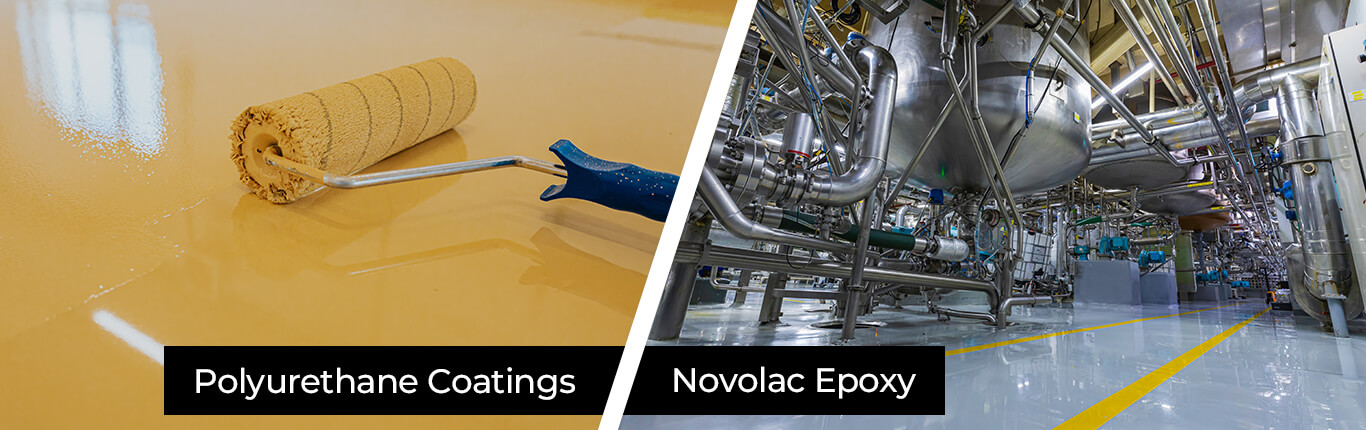
Choosing the right coating in industrial flooring and protective surface sections is very important in achieving the desired results in durability, chemical resistance, and longevity hence, each project’s requirements must be considered. Among the endless options lies Novolac Epoxy Coatings and Polyurethane Coatings, which are some of the more notable options. Knowing the characteristics of each coating and its application areas help make the right decision.
What is Novolac Epoxy Coating?
Novolac Epoxy Coatings are the uppermost protective coats obtained from epoxy phenol novolac resins. These coatings are best known for their chemical and thermal resistance and are perfect for tough industrial applications.
The main features of Novolac Epoxy Coatings are: These coatings have exceptional resistance to concentrated acids, alkalis, and a broad spectrum of chemicals, making them ideal for highly corrosive zones of chemicals, fertilizers, petrochemicals industries.
- Superior Chemical Resistance – They offer exceptional resistance to concentrated acids, alkalis, and various chemicals, making them suitable for aggressive corrosive zones in industries such as chemicals, fertilizers, and petrochemicals.
- Higher Glass Transition Temperature – This property ensures stability and performance under elevated temperatures, enhancing the coating’s durability.
- Improved Mechanical Properties – Novolac epoxies exhibit enhanced mechanical strength, contributing to their robustness in industrial applications.
What is Polyurethane Coating?
Polyurethane Coatings are the most flexible and resilient protective layers. They are used widely because of their biomechanical properties in various industries. These coats have the following:
- UV Absorption – Polyurethane coatings do not lose color and gloss due to sunlight. Therefore, they are good outdoors.
- Impact and Abrasion Resistance – Their inherent flexibility allows them to absorb impacts and resist scratches, contributing to a longer lifespan.
- Gloss Retention and Surface Appearance – These coatings maintain a glossy finish over time, increasing the appeal of surfaces.
Novolac Epoxy vs. Polyurethane Coatings
When comparing Epoxy Coatings vs. Polyurethane Coatings, several factors come into play.
1. Chemical Resistance: Novolac Epoxy Coatings take the cake for this one. Dr Cipy observes their, “extreme resistance against concentrated acids, alkalines and even solvents.” These chemicals are abundant in processing plants, and nova lobes are ideally suited for such zones. Concerning mild chemicals, Polyurethane Coatings hold up decently, but they cannot compete with novolacs’ extreme conditions.
2. Durability & Flexibility: Polyurethane Coatings take the lead with their elasticity—great for floors with slight movement or heavy foot traffic, like showrooms. Novolac Epoxy, while super durable, is more rigid and can crack under stress if not applied right, per Dr Cipy’s industrial focus.
3. Heat Resistance: Polyurethane coatings do well with heat but cannot take the same extremes. Novolac Epoxy Coatings perform significantly better than standard epoxies in high-heat zones, for example factory ovens.
4. UV Protection: Polyurethane Coatings shine here. They resist yellowing under sunlight and are perfect for outdoor patios or sunny warehouses. Novolac Epoxy tends to fade or chalk if exposed to UV long-term, so it’s better indoors.
5. Finish & Looks: Polyurethane Coatings are for you if you’re after a glossy, showroom coated appeal. Novolac Epoxy coatings focus on function over flash.
Why Choose Dr Cipy?
Consider Dr Cipy, a leading manufacturer specializing in a wide range of flooring and coating products for high-quality coating solutions. Our offerings include Novolac Epoxy Coatings, which is known for its extreme resistance to concentrated acids and chemicals, making them ideal for aggressive corrosive zones in industries such as chemicals, fertilizers, and petrochemicals.
Conclusion
The choice between Novolac Epoxy Coatings and Polyurethane Coatings hinges on the application’s specific requirements. For environments demanding high chemical and thermal resistance, Novolac Epoxy Coatings are the superior choice. Conversely, Polyurethane Coatings are more suitable for applications where flexibility, UV stability, and abrasion resistance are paramount.
Dr Cipy specializes in many flooring and coating products, such as epoxy, polyurethane, EPU and PU concrete, to name a few. We cater to various industries, from food and beverages to healthcare, pharmaceuticals and manufacturing. Dr. Cipy is a market leader and manufacturer of coating solutions, so for the best quality epoxy flooring solutions, look no further than here. Our commitment to innovation and quality ensures durable and high performing product delivery.
Ready to coat your floors right? Contact us now.
FAQs
Novolac Epoxy offers superior chemical and heat resistance, while Polyurethane Coatings provide better flexibility and UV resistance.
Novolac Epoxy is more durable in harsh chemical and high-temperature environments, whereas Polyurethane is better for impact and abrasion resistance.
Novolac Epoxy Coatings are ideal for industries exposed to chemicals, while Polyurethane Coatings work better in high-traffic areas due to their flexibility.
Yes, Novolac Epoxy can be used as a base coat for chemical resistance, with Polyurethane as a topcoat for UV protection and durability.