
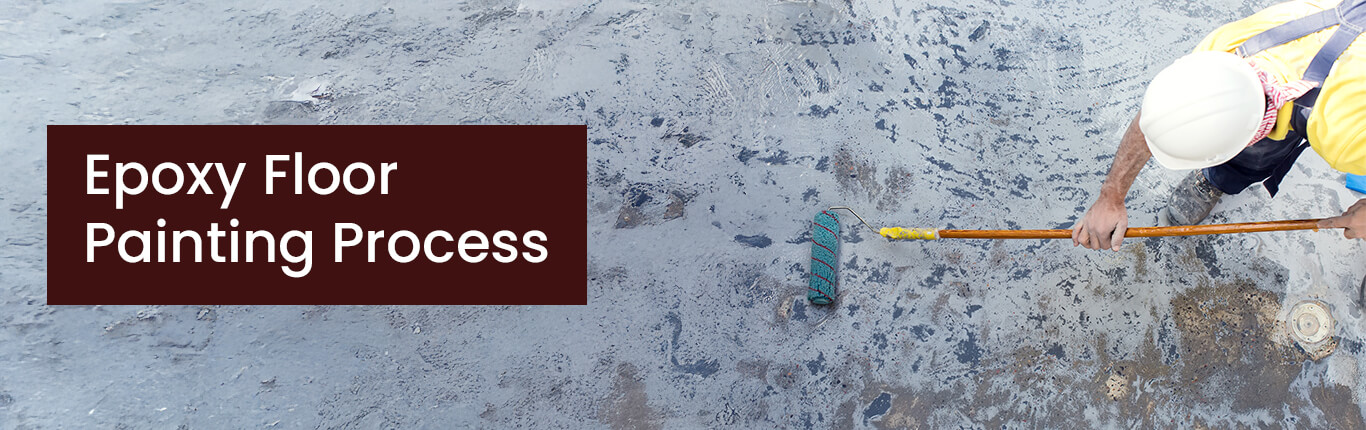
Epoxy floor painting looks simple from the outside. Roll it on, let it dry, and you’re done. In reality, the result depends far more on what happens before the paint is applied than on the paint itself.
Whether you are designing a concrete floor in your warehouse, using epoxy paint to finish off your garage floor or upgrading from an outdated coating, knowing all aspects of the epoxy floor painting process allows you to manage expectations and understand how long the finished product will last, how durable it will be, and what finish it will have.
Step 1: Assessing the Floor and Its Conditions
The condition of the concrete floor is paramount to any epoxy project. Its age, moisture content, surface strength, and contamination history matter.
Before any work begins, the floor is checked for:
- Oil, grease, or chemical stains.
- Cracks, spalls, or weak patches.
- Moisture issues or dampness.
- Surface smoothness and dust.
Skipping this step is the most common reason epoxy floors fail early.
Step 2: Surface Preparation
Surface preparation decides whether epoxy bonds properly or peels within months.
The age of the concrete, its moisture level, compression strength and history of contamination all affect how well the epoxy paint will bond to the concrete.
The concrete will not be in a natural state to receive the epoxy floor paint. To prepare the concrete for the epoxy paint, typically, the following steps occur:
- Mechanical grinding/shot blasting so the pores can be opened.
- Dust, oil, grease and previous coatings are removed.
- Any cracks, joints and damaged areas will need to be repaired and/or patched.
- The surface will need to be cleaned, dried and disturbed or textured.
All of these processes enable a mechanical key to be put in place, providing the epoxy with an anchor point to stay attached to the concrete surface.
Step 3: Primer Application
The primer coat is applied after surface preparation is complete. This is not an optional step!
A primer coat does the following:
- Seals the concrete pores.
- Improves the bond between the epoxy paint and concrete.
- Prevents air bubbles & pinholes.
- Manages possible minor variations in moisture.
In addition to these benefits, in many cases, the primer adds to the overall chemical resistance of the industrial epoxy paint systems.
Step 4: Base Coat (Epoxy Floor Paint Application)
This is the stage most people think of as “epoxy floor painting.”
The epoxy floor paint is mixed precisely and applied using rollers or squeegees, depending on the required thickness and finish. For garages, this may be a thinner coating. For industrial floors, the base coat is often heavier and more controlled.
At this stage, optional elements can be added:
- Colour pigments.
- Quartz or aggregates for slip resistance.
- Decorative flakes (commonly used in garage epoxy floor paint systems).
Step 5: Intermediate or Additional Coats (If Required)
Not all epoxy floors stop at one coat.
Depending on usage, the system may include:
- A second epoxy coat for thickness.
- A build coat for heavy-duty floors.
- Line marking or zoning layers.
Industrial and commercial floors usually require more than a single coat to achieve performance, not just appearance.
Step 6: Topcoat and Protection
In many applications, especially where abrasion or light exposure is expected, a protective topcoat is applied. This may be epoxy or polyurethane, depending on the environment.
The topcoat improves:
- Wear resistance.
- Ease of cleaning.
- Colour stability.
- Overall floor life.
This final layer often determines how the floor looks after years of use.
Curing and Return to Service
Epoxy floor painting doesn’t end when the last coat is applied. Curing time matters.
Typical timelines:
- Light foot traffic: 24–48 hours.
- Equipment or vehicles: 3–5 days.
- Full chemical resistance: up to 7 days.
Temperature, humidity, and coating type all affect curing speed.
Where Epoxy Floor Painting Is Commonly Used
- Warehouses and manufacturing units
- Commercial garages and parking areas
- Workshops and service centres
- Basements and utility areas
- Retail back-of-house spaces
For areas with heavy wash-downs or extreme temperature changes, epoxy is often paired with other systems for better performance.
Dr Cipy’s Approach to Epoxy Floor Painting
Dr Cipy supplies complete epoxy flooring systems for industrial, commercial, and residential use. Their range includes epoxy primers, floor paints, self-levelling systems, and heavy-duty industrial epoxy paint solutions.
Each system is designed around site conditions, not just product selection. Proper preparation, correct layer build-up, and controlled application are what ensure long service life.
Conclusion
An epoxy floor is a series of processes rather than just a final design step. From surface preparation to final curing, every stage affects how the floor performs over time.
If you apply an epoxy floor correctly, it will withstand heavy traffic, maintain its appearance, and be maintained easily with simple cleaning. The right epoxy floor can be used for most types of industrial or commercial applications. When rushed or poorly prepared, even the best epoxy floor paint will fail.
Understanding the process helps you plan better, budget accurately, and choose the right system for your space. Contact us to know more.
FAQs
Most projects take 2–5 days, including preparation, coating, and initial curing, depending on area size and system type.
Because epoxy needs a rough, clean surface to bond properly. Poor preparation leads to peeling and early failure.
Yes. Old concrete can be coated once it is properly cleaned, repaired, and mechanically prepared.
Typically, one primer coat and one or two epoxy coats, depending on traffic and performance needs.
Light use is usually possible after 24–48 hours, with full curing achieved in about 7 days.
Yes. Epoxy is widely used in factories, warehouses, garages, and commercial facilities.
With proper preparation and maintenance, epoxy floors can last 7–15 years, depending on usage conditions.